I think we are all curious about why we are here. Was our birth planned or was it an accident?
Of course, few of us ever actually find the answer. Either we never ask mom or pop, or if we do the answer is evasive. Then again, sometimes the answer is not evasive, but it could still be misleading. What parent wants to tell a child that he/she was an accident, so we are always left with doubt. But sometimes circumstances may indicate the climate at the time of conception, and raise hope that maybe, just maybe, you are not the result of a mistake.
Considering that my sister was born in 1917 and I was born in 1926, I am no stranger to this problem. How come nine years intervened before I came along? It always looked like a mistake to me. It would to anybody! But then some information came to my attention that gave me hope that perhaps I really was a planned baby. That hope came from the New Yorker Magazine.
For many years I had heard that my father was published in the first issue of the New Yorker. I never paid a great deal of attention to that since there were other things to occupy my mind like a long career in the navy , moving here and there as part of it, marrying, divorcing, remarrying, raising and educating my children, and later, my civilian occupations. But then things slowed down. I sold my business, remarried for the third time, the kids went on to lead their own lives and like a lot of older folk I began to think about the genealogy of the family and who did what.
Most families pass along folders full of old newspaper clippings, faded photos, hair clippings, first teeth and other little sentimentalities that families like to keep. My parents and grandparents were no different, so I inherited a few cardboard boxes full of miscellany that was the representation of the family past. Going though this stuff is slow work, old papers crumble, semi-identified relatives and friends occupy time to try to re-identify, visiting kids dig in and rearrange things and the stacks are not in any chronological order anyway. Nevertheless the work progressed, and among the documents I came upon a couple of old mimeographed papers upon which my Dad had written, “This shows how Harold Ross was looking about, trying to find the right identity for the New Yorker”. The mimeographed sheets were rough guidelines that Ross was issuing to his editorial staff and to potential contributors. Wow – maybe the stuff about Dad and the first issue of the New Yorker had some basis for fact!
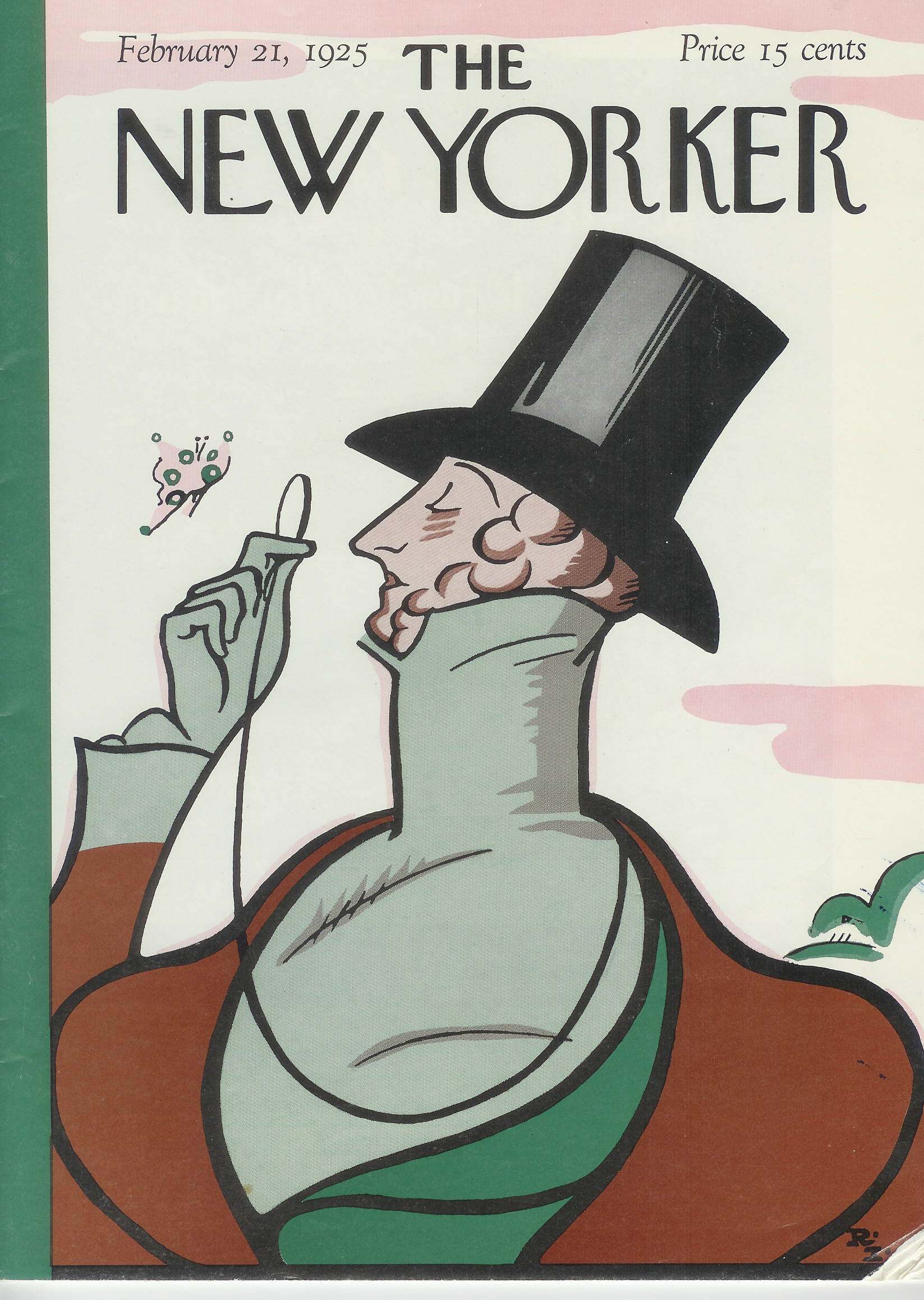
Next step was a letter to the New Yorker. Was my Dad in the first issue? The initial answer was “No, he was not.”, but they sent me a reprinted copy of that first edition and the information that he had four cartoons published in the magazine in the issues of December 5, 1925; January 30, 1926; October 30, 1926 and November 6, 1926. Well that scotched the idea that dad’s work might have appeared in the first issue of the magazine. I forgot about it for a few months but then I began to read through that February 21, 1925 magazine and – Gulp! – there it was on page 11. It was a short, two column article entitled, A Boon to Babbitts, by Ernest F. Hubbard. The New Yorker history folks had somehow missed it.
The old unanswered question crept back into my mind. Was I a mistake? Maybe that article in the first issue New Yorker and the later cartoons had some bearing on my existence? In 1925 my dad was still a young guy working his way up as a writer in a hat magazine. Money could not have been abundant. He was married, had a wife and a young daughter to raise. More income would be needed to increase the family size . Now here was money, New Yorker money. My day brightened. I was born on January 15, 1926, about 10 months after that first article appeared. The folks would have had plenty of time to snuggle up in bed, dreaming about this new source of income and about the future kid. Planned parenthood at its finest.
I gave thanks to Harold Ross. He must have been some kind of guy! But then that lingering doubt returned. If I was here as the result of the New Yorker article and its benevolent editor, how come they did not name me Harold or Ross? Wherefrom Donald? No one will ever know and hardly anyone but me will care. We are back to square one, but Ross Hubbard wouldn’t have had a bad ring to it!